
LED DISPLAY BENEFITS : TYPES OF LED SCREENS
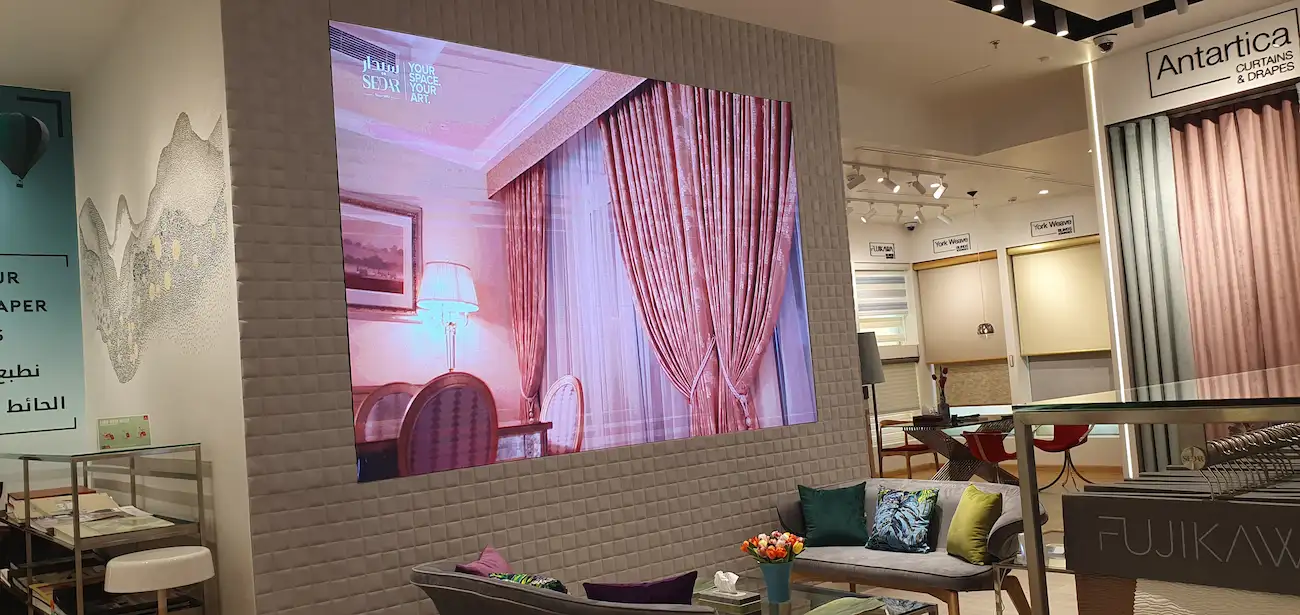
If you’re considering an LED display for your business, you’ve probably run into a wide range of options — and just as many questions. This guide breaks down what LED screens are, how they work, the different types of LED screens on the market, and how to choose the right one for your space.
Whether you’re looking to buy indoor or outdoor LED screens in Dubai, UAE, understanding these basics will help you make a confident decision.
Types of LED Screens
- Indoor LED Screens
- Outdoor LED Screens
- LED Video Wall Screens
- Transparent LED Screens
- Flexible LED Screens
- Immersive LED Screens
- LED Shelf Displays
- Creative LED Screens
What is an LED Screens?
LED stands for Light Emitting Diode — the same small bulbs found in countless electronic devices. Large-format LED screens use thousands of these diodes, arranged in dense arrays, to produce bright, high-resolution images.
Each diode is low-power but high-brightness, which is why LED displays consistently outperform older display technologies in visibility and energy efficiency. By combining red, green, and blue (RGB) light in different intensities, an LED screen can reproduce virtually the entire visible color spectrum — far beyond what older fluorescent or CRT-based displays could achieve.
You’ll find LED screen technology everywhere today: televisions, computer monitors, high-resolution retail billboards, and large-scale LED video walls. In high-end displays, diode arrays can reach pixel densities of 4K and beyond, enabling incredibly detailed, smooth-moving visuals.
LED technology has also evolved beyond large screens. Compact, segmented LED readouts are commonly used on instrument panels and embedded systems, while dot-matrix and light-bar LED formats are used for simpler information displays.
A Brief History: From CRT to LCD to LED
Display technology has gone through several major shifts:
- CRT displays required significant space and cost, limiting where and how they could be used.
- LCD (Liquid Crystal Display) technology replaced bulky CRT screens, offering a slimmer, more practical alternative.
- LED display screens eventually took over the market, offering superior brightness, energy efficiency, and durability compared to LCD.
Today, leading LED screen suppliers and companies — including Dgicon — dominate the display market across Dubai and the wider UAE.
Understanding Pixel Pitch in LED Displays
Pixel pitch refers to the center-to-center distance between two adjacent LEDs on an LED module screen, usually measured in millimeters (e.g., P2.5, P4, P10).
Pixel pitch directly affects image clarity and ideal viewing distance:
- Smaller pixel pitch (e.g., P1.5–P2.5) → higher resolution, ideal for close-up indoor viewing.
- Larger pixel pitch (e.g., P6–P10) → suited for outdoor displays viewed from a distance.
Choosing the right pixel pitch is one of the most important decisions when selecting an LED screen, since it directly impacts both image quality and cost.
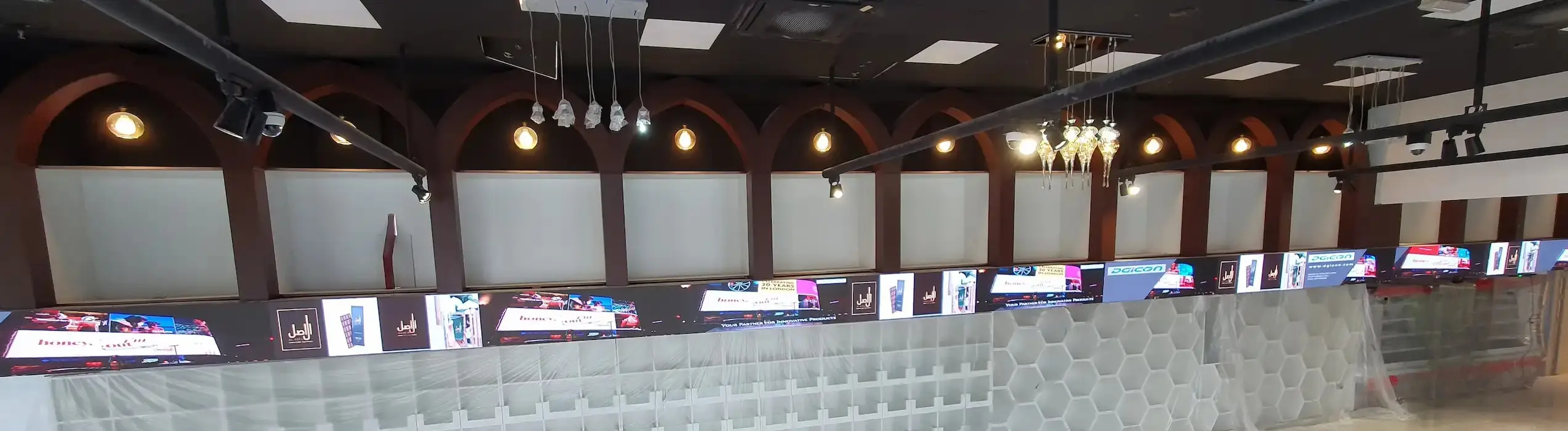
How Do LED Displays Work?
LED displays are built from a large array of light-emitting diodes mounted on a flat panel. Each diode emits red, green, or blue light at a controllable brightness level.
Just as mixing paint colors creates new shades, combining red, green, and blue light in different proportions produces the full range of visible colors. Up close, you can actually see the individual diodes that make up the image — but from a normal viewing distance, they blend seamlessly into sharp, vivid visuals.
Get Expert Advice on LED Screens in Dubai, UAE
Choosing the right LED screen doesn’t have to be overwhelming. Dgicon’s team can help you evaluate pixel pitch, size, brightness, and installation needs to find the perfect solution for your space.
You can visit our site, Dgicon.com or call +971 55 418 1160 to get support from our experts for your LED Products.
